



Navigating Loss: The ‘Before’ and the ‘After’
Interview with Madeleine Donner
The Kinder Way Podcast – Season 2, Episode 8





The information provided in The Kinder Way Podcast is for educational purposes only, and is not intended as a substitute for professional advice from a licensed advisor. The content of each episode is the opinion of the host and interviewees, and does not represent the views of Serenia Life Financial or any of its other subsidiaries or affiliates. Please always consult a licensed insurance advisor for guidance. Serenia Life Financial does not endorse any third-party views referenced in this content.
“As my final act of love… here’s where I keep all my legal documents.”
Trust us, this isn’t as strange as it sounds. If you’ve ever lost a loved one, you know how difficult it can be to navigate grief while funeral planning. From “How much does a funeral cost in Canada?” to “How do I write an obituary?”, there are many important questions, decisions, and tasks that happen after a loss. The reality is that many challenges could be avoided if we prioritized having that one difficult conversation while our loved ones are still happy and healthy. Funeral pre-planning, if you will.
In our latest episode of The Kinder Way Podcast, our host interviewed VP of Client Success at Empathy, Madeleine Donner, and was surprised to learn some pretty sobering statistics when it comes to estate planning in Canada. The good news is, it doesn t have to be this way. Tune in to learn more!
Related Articles
- Estate Planning & Life Insurance: How to Approach ‘The Talk’ With Your Folks
- Estate Planning: Your Voice After You’re Gone
- GUIDE: 10 Ways to Protect Your Family After You’re Gone
- 🎧Having ‘The Talk’ With Your Folks Doesn’t Have to Be Awkward
- 🎧 And They Say Diamonds Are Forever
Member Benefits
Episode Transcript
Kathleen O’Hagan: Hello, and welcome to the latest episode of The Kinder Way Podcast! I’m so excited to have Madeleine Donner on the show with me today.
Madeleine is VP of Client Success at Empathy – the company that created the award-winning loss support tool that Serenia Life provides to our members and their loved ones after a death. Madeleine tells me that she was drawn to this role for a deeply personal reason: she sadly lost her dad to cancer many years ago, and understands firsthand how overwhelming and isolating grief can be.
Today, Madeleine is the mom of a spirited and curious 2 and a half year-old little girl, and she’s quickly discovered that no amount of professional experience prepares you for negotiating with a toddler. And, speaking of difficult conversations between parent and child, she tells me that – yes – she has had versions of “the talk” with her mom. Tune in to the previous episode of the podcast to see what kind of talk I’m referring to.
Fun fact about Madeleine: She holds dual Canadian and American citizenship, so she’s always rooting for two countries at the Olympics!
KO: Hi, Madeleine! Welcome!
Madeleine Donner: Thank you so much for having me, Kathleen – it’s genuinely such a pleasure. And I have to say, knowing that you’ve had personal experience with loss yourself makes this conversation feel really meaningful. I’m excited to be here.
KO: So glad to have you. Okay, let’s get right into it! For people who may just be hearing about Empathy for the first time, can you briefly explain what it’s all about? What’s your elevator pitch?
MD: Empathy is a leading technology company that combines cutting-edge innovation with genuine compassion to support families through life’s most challenging moments. We’re trusted by Fortune 500 companies and leading life insurers – including Serenia Life – and we serve over 40 million individuals across North America.
Our flagship product is loss support: when a family loses a loved one, Empathy pairs them with a dedicated Care Manager and gives them access to a full suite of tools to help them navigate everything that follows – estate settlement, notifying institutions, closing accounts, grief support. All in one place, all with real human guidance alongside the technology. Because what nobody tells you is that grief is hard enough on its own, and yet in the middle of it, you’re suddenly buried in an overwhelming amount of planning, decision-making, and just so many tasks!
But what I’m really excited about is that Empathy has grown beyond bereavement into what we call the other “moments that matter” – things like legacy planning, end-of-life preparation, and estate management before a loss occurs. The idea is that Empathy can be a partner for families at every stage, not just in the aftermath of loss. Our mission is to make care as practical as it is compassionate – easing emotional burdens, simplifying complex tasks, and helping families move forward with clarity.
KO: As someone who also lost her dad to cancer, I personally see the value in a service like Empathy – 100%. So, let me ask you: Of all the necessary tasks that follow the death of a loved one, what would you say are the top 3 most challenging ones for families? And does Empathy take on some of that responsibility?
MD: Such a great question, and honestly the answer might surprise people. Based on what we hear from the families we work with, the top three are:
First, estate settlement – which includes navigating probate (or: handling all the legalities after someone dies), taking stock of everything they left behind, and then taking care of all the required next steps can take months or even years, and most people have no idea where to start.
Second, notifying and dealing with institutions – banks, the CRA or IRS, pension providers, insurance companies, government benefit programs. Each one has its own process, its own paperwork, its own timelines. It’s exhausting even for someone who isn’t grieving.
And third, closing accounts – and this one often catches people off guard, because it’s not just logistically complicated, but it can drag on for months, sometimes years. And every account you have to close is another reminder of the person you lost – their subscriptions, their email, their social media. There’s a real emotional weight to each one of those closures that people don’t anticipate, and yet you still have to do it – all while navigating the red tape to actually get the job done.
And yes, to answer your second question, Empathy addresses all of these directly. Every family we work with is paired with a dedicated Care Manager who personally guides them through each step — someone who can answer questions, provide context, and just be there during what is genuinely one of the hardest periods of a person’s life. And that human support is paired with technology that’s been designed to be really intuitive and easy to use – so families can see exactly where they are in the process, what needs to happen next, and feel a sense of progress even when everything feels overwhelming. It’s the combination of those two things – real human care and smart, simple technology – that I think sets Empathy apart.
KO: I love the pairing of human with tech. Now… correct me if I’m wrong, but it sounds like some of those challenges are often the result of not having had those difficult conversations with aging parents – or even our spouses – while we are still healthy enough to express our end-of-life wishes. Because as important as it is to have a will, it’s not JUST about the will, is it?
MD: You’re so right, and it’s something we hear from families all the time after the fact – “I wish we’d had that conversation sooner.” A will is critically important, but it really is just one piece of the puzzle. What a will typically doesn’t capture are the things that matter just as much in practice: Where are the documents? What are the account passwords? What were their wishes around a funeral or memorial? Did they want to be buried or cremated? Who gets the items that have sentimental but not financial value?
And the reality is, most families haven’t had those conversations – and the data backs that up. From a 2025 IG Wealth Management survey, we learned that 54% of Canadians currently lack an estate plan. And many are entirely unfamiliar with key aspects of estate planning, with 47% reporting that they are not knowledgeable about the consequences of not having a will. And perhaps most sobering – just four-in-ten Canadians have made plans to safeguard their financial future in the event of cognitive decline.
What strikes me personally – and this is something I think about having lost my own dad – is that those unspoken wishes don’t just create logistical challenges, they create emotional ones too. Families end up making decisions while they’re grieving, without guidance, and sometimes that leads to conflict or lasting regret. The gift of having those conversations ahead of time isn’t just practical, it’s an act of love. It takes the burden off the people you leave behind.
And that’s exactly the gap that our other product – LifeVault – is designed to close. It’s Empathy’s estate planning solution – a secure, centralized place where you can organize your documents, capture your wishes, and make sure the people you love can find everything they need when it matters most. It addresses all of those statistics head-on. Because planning ahead shouldn’t be complicated – it should feel like one of the most caring things you can do for your family.
KO: I’m so happy you brought up LifeVault™ since we recently added this benefit to our collection of member benefits. In fact, Serenia Life was the first to launch LifeVault in Canada! (We’re pretty excited about that.) Can you briefly explain its main features for our listeners who may not be aware?
MD: Yes, and I’m so glad Serenia Life has made this available to members – because it speaks directly to everything we were just talking about. LifeVault is essentially a secure digital platform where you can organize and store everything your family would need in the event of your death or a medical emergency. That means your will, insurance policies, financial account information, healthcare directives, funeral wishes – all of it in one centralized, easy-to-access place.
And it’s designed to be genuinely easy to use – because we know that the reason most people haven’t done this isn’t that they don’t want to, it’s that it feels overwhelming or they just don’t know where to start. LifeVault removes that barrier. Think back to that stat – 54% of people don’t know where their parents stored important documents. With LifeVault, they don’t have to guess. It means that when the time comes, your family isn’t scrambling. They know exactly where to look, and they can focus on each other instead of worrying about all this other stuff.
KO: Very cool. And a final question for you – what is this Intergenerational Wealth Transfer I keep hearing about? And why should Gen Z and Millennials be aware of (and prepared for) it?
MD: Such an important topic – and one that I think genuinely catches a lot of younger people off guard. The Intergenerational Wealth Transfer refers to what economists are describing as the largest transfer of wealth in history – an estimated tens of trillions of dollars that will pass from the Baby Boomer generation to their Gen X, Millennial, and Gen Z children and grandchildren over the coming decades.
Now, for a lot of Millennials and Gen Z, hearing the word “inheritance” might feel abstract or far off – but here’s why it’s worth paying attention to now. Many of them are going to find themselves, perhaps sooner than they expect, either receiving an inheritance or taking on the responsibility of settling a parent’s or grandparent’s estate. And as we’ve talked about today, that process can be incredibly overwhelming – legally, financially, and emotionally – especially if planning conversations haven’t happened in advance.
The other piece is that this moment is also a prompt for younger generations to think about their own planning. It’s never too early to start organizing your wishes, your documents, your financial picture. The families who navigate these transitions most smoothly are the ones where both sides of that conversation have been intentional and prepared. And that’s really where tools like LifeVault and Empathy’s broader platform come in – helping families on both ends of that transfer feel ready.
KO: I love it. So great… and so necessary! Thanks for explaining the importance of planning – for all generations, really. I’m definitely going to make use of LifeVault very soon, that’s for sure! Well, we’ve come to the part of the interview where I like to ask my guests to sprinkle a little bit of kindness into the episode. Can you share a time when you observed or took part in an act of kindness?
MD: This actually just happened last month, and it was such a small moment but it really stayed with me. I was on the subway and there was a little boy – maybe ten years old – standing in the middle of the car, fairly small, looking a bit panicked surrounded by all these taller adults. The train was about to move and he couldn’t reach any of the handrails to hold on. You could just see him getting more and more flustered trying to figure out what to do.
I caught his eye and asked the person next to me if they’d mind sliding over just a little to make room for him to squeeze in and grab the bar. They did, no hesitation. And the look on this little boy’s face – this big, relieved smile – and he looked right at me and said “thank you.” It was genuinely such a tiny thing, but it completely warmed my heart for the rest of the day. Such a good reminder how a small act of kindness goes a long way.
KO: Ahh, so lovely. As the mom of a 10-year-old boy, it’s good to know there are kind people out there looking out for kids like him. So, thank you – AND thank you again for taking the time to chat with me today!
MD: Thank you so much, Kathleen – this was a really wonderful conversation. I hope anyone listening feels inspired to have even one conversation they’ve been putting off with the people they love. And we at Empathy are truly proud to partner with Serenia Life to make that a little easier. Thanks for having me.
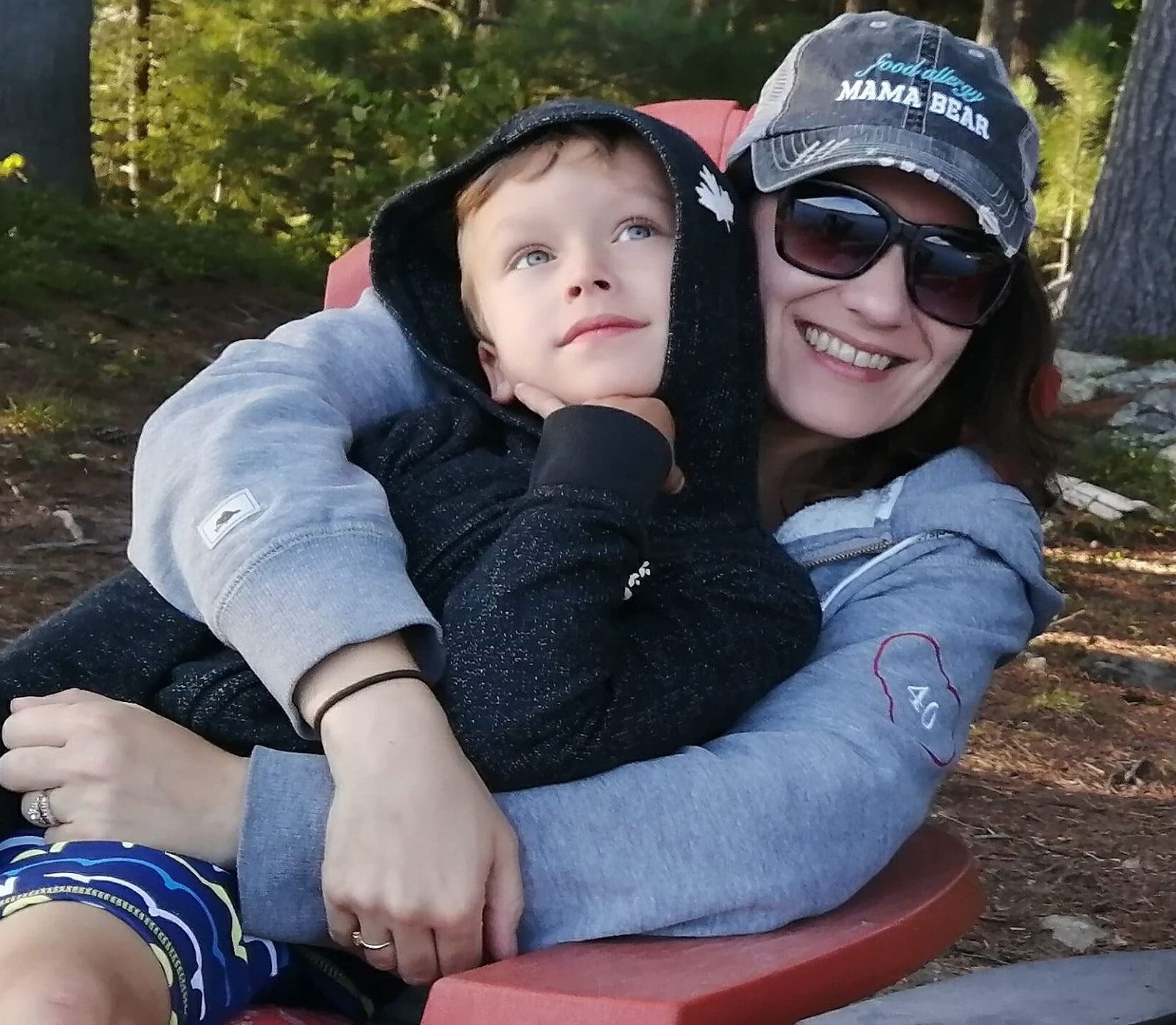
Meet our Host
Kathleen O’Hagan is the Digital Content Strategist & Writer at Serenia Life. She is married with one kid and two cats, and enjoys travel, discovering new restaurants, and idealizing life in the 80s and 90s. (Yes, she bought life insurance for her son – it’s an investment in his future! And yes, her pets are in her will.) See what else she has to say as host of the newly launched The Kinder Way Podcast.
