



Having “The Talk” With Your Folks Doesn't Have to Be Awkward
Interview with Julie O’Hagan
The Kinder Way Podcast – Season 2, Episode 7





The information provided in The Kinder Way Podcast is for educational purposes only, and is not intended as a substitute for professional advice from a licensed advisor. The content of each episode is the opinion of the host and interviewees, and does not represent the views of Serenia Life Financial or any of its other subsidiaries or affiliates. Please always consult a licensed insurance advisor for guidance. Serenia Life Financial does not endorse any third-party views referenced in this content.
When it comes to end-of-life planning in Canada, the stats tell us that many of us are behind when it comes to making these very important decisions. Maybe that’s because having “the talk” about end-of-life planning can feel a little bit awkward – whether we’re chatting with our life partner, business partner, or aging parents. But as more and more Canadians join the sandwich generation, having difficult conversations with parents becomes all the more important.
If you’ve ever wondered how to talk to aging parents about finances, funeral wishes, or where they keep their will, this latest episode is for you. Using only this article as her guide, our host asks her boomer mom the awkward questions about her end-of-life wishes… and realizes it doesn’t have to be so awkward after all. Tune in to see how it goes!
Related Articles:
- Estate Planning & Life Insurance: How to Approach ‘The Talk’ With Your Folks
- Estate Planning: Your Voice After You’re Gone
- Green Funerals: Eco-Friendly End-of-Life Planning
- Donating Life Insurance Benefits
- GUIDE: 10 Ways to Protect Your Family After You’re Gone
- 🎧Talking Money With My Boomer Mom [Interview with Julie O’Hagan]
< Previous Episode Next episode >
Episode Transcript
Kathleen O’Hagan: Hello, and welcome to a special episode of the Kinder Way Podcast. Today I’m going to be referencing an article from the Serenia Life website to help guide a very important talk with my mom. The talk, if you will. And no, it’s not about the birds and the bees. We’re talking end-of-life planning—my mom’s end-of-life planning wishes, to be exact.
Awkward? Well, yeah, it could be.
A few years ago, I probably would have avoided this conversation at all costs. But having worked in this industry—life insurance—for half a decade now, and having lost my dad recently, I see how important these conversations really are.
So let’s see how things go with my mom.
Note that other than the article I’m scanning while we chat, this talk is totally spontaneous and unscripted.
Here we go.
Okay. Hello again, Mom. Welcome back to the show.
Julie O’Hagan: Hello.
KO: So today we’re going to try something different. We’re going to go through the questions in an article that we published a while ago called How to Approach the Talk with Your Folks, having a conversation about some awkward topics like estate planning and life insurance and that sort of thing.
So I’m just going to ask you questions, and you just tell me what you remember, what you know. Okay?
JO: All right. Okay.
KO: So we’re going to start with your financial goals. I know you’re retired. I know it’s later in life for you, but do you have any sort of financial goals at this stage, whether it be helping your grandchildren in the future, planning some big family getaway, putting money away if you’re worried about a future health condition—anything I’m not thinking about that you’re planning for?
JO: Well, I did see my financial advisor at the bank after your dad passed away, and she’s got me all mixed up with investments and TFSA and everything.
I always thought that maybe I would go on some trips, but it doesn’t seem as much fun without your dad.
Big things… sometimes I think, well, I have to have money for certain big upkeep expenses of the house. That kind of gets me nervous sometimes, but I know I have the money. I sometimes think I don’t have the money, but I do have the money to keep afloat here.
KO: Okay, so now let’s talk about your estate planning documents. It sounds like you may have looked at your will recently. Did you need to make any updates? That could be anything that happens in your life—new grandchildren, a death in the family, a new inheritance, anything like that.
JO: Well, yes. Once your spouse passes away, especially at our age, all kinds of things have to be changed, edited by the financial advisor. I could never do that on my own.
So, for example, Dad’s teacher’s pension or his government pension and other such things—they have to legally change things so that some of that would come to me, for example, and other things that I would lose because he’s not here.
So a lot of things have to be done if you lose your spouse.
KO: Did you have to make any changes to your will recently after?
JO: We absolutely did. The will has been updated as of when Dad passed away, so about two years ago. I have a completely new copy from another lawyer, not the original lawyer because he’s not doing that anymore.
KO: What is the biggest change to your will? Like when a spouse dies, what is the change that you need to make?
JO: Well, it all looks so similar, except that, for example, he’s never going to be a beneficiary. I was the beneficiary of his will, so that goes away.
It was suggested that trustees, for example, should be somebody in the country like yourself.
KO: Mm-hmm.
JO: And also power of attorney.
KO: So I have kind of a funny question about your will. When you got your cat a few years ago, did you put your cat in the will?
JO: No, I didn’t put my cat in the will. So I guess you’re just going to have to take her. She’ll probably—I’ll probably live longer than my cat.
KO: Hopefully, yes.
JO: If she passes before me, we’re all set. And if she doesn’t, well, I’ll expect you to take her on.
KO: Too many cats can be a problem.
JO: I actually did not know about that. I saw that later on. Maybe we’ll have to talk about that.
KO: Something to look into with your lawyer.
Okay. Another question: have you appointed a power of attorney? I think there’s two powers of attorney, right? There’s one for health, and then there’s one for property?
JO: Property is one and medical is the other. And that’s a funny thing—that I’m sure I’ve got somewhere, and I’m sure that it’s you and Sean. You would be first because you’re in the country.
I think that I was the power of attorney for your dad, and I’ve got that in front of me. But I didn’t have time to find mine. It should be here with my will, but it’s not jumping out at me at this point.
KO: That’s homework for you.
JO: Yeah, yeah.
KO: Okay. Have you ever thought about—here’s an awkward question—what sort of funeral you would prefer? I mean, there’s new things now, like green funerals. There’s crazy stuff if you look into it. Really eco-friendly things. Have you thought about that?
JO: Yeah, I have thought about it, and I basically don’t want it to be in a funeral home, for example, because I’ll have no relatives or friends left except for you and Sean and my grandkids.
I’ve always thought it’d be great just to have it in my house with my favorite music playing and photo albums all over the place, and definitely an urn.
I don’t mind that idea of the green funeral. I just think it’s another complicated thing to do. I’m not sure. I could still think about that.
So I have it all written out, actually. Someday you can read what I want. Pretty basic.
I’m sorry, I keep looking at all the pages in front of me.
KO: Well, that’s okay. That leads to my next question, and I think I kind of have the answer, which is: do you have all your important stuff in order?
So it sounds like you have a lot of that with you, but is it all kind of together? Even the big things like mortgage, credit card debt, personal loans—but then there’s the smaller things like passwords or even your social insurance number, which you apparently need to order a death certificate. Is that kind of stuff all in one place?
JO: Well, obviously I don’t have any debt. And when I have debt on a credit card, it’s paid every month no matter what the cost is—always paid. So there’s no debt.
As far as passwords, when we had that big fraud thing that happened to me and we had to change so much, I lost the ability to remember all my passwords, which followed a certain formula. But you gave me a password book, as you recall. I think you know where that is.
What was the other thing you asked me?
KO: Insurance number.
JO: Oh yeah. Actually, it’s not in my wallet. It’s interesting that you mention that. So what I think I’m going to do is put that little card in with the will. Just throw it in that big brown envelope.
I also have my life insurance policy in there.
KO: Well, that all goes together, right? That’s all the important stuff.
Okay, so now I obviously know you have a life insurance policy. Do you remember who the beneficiary is?
JO: You and Sean are the beneficiaries, I believe.
KO: Okay. And so is it just us? No charity, no grandchildren?
JO: Oh no. That would be in the will usually, right? Isn’t that the case? That the life insurance is just—
KO: No, you can actually have a charity as a beneficiary. You can have multiple beneficiaries.
JO: Well, I’ve only changed it to Sean and Kath equally.
Funny how they write it up. I think it’s only like twenty thousand. I don’t know. That’s what it looks like.
KO: That’s an average cost of a Canadian funeral. Well, a high-end cost of a Canadian funeral.
JO: And I tried to keep your dad’s low, and I still think I paid at the ten-thousand-plus.
I’m going on and on. Okay, I’ll stop. What would you like to ask me now?
KO: I think we mostly covered all these questions. I’m just trying to think if there’s anything else that you, when you were going through your notes or anything, thought you wanted to share that maybe we’ve never talked about or I never asked you. Have we covered everything?
JO: Well, I don’t think I’ve ever shared this page I’ve got here. Maybe you should read it soon or at some point. It’s just something that I’ve written, which you can do. You don’t have to have it typed up legally—what you want done once you’ve passed away. That’s totally up to you.
So it’s kind of interesting.
The interesting thing is too, there was a previous one. So I tried to be really organized because, as you know as well as I do, there was so much to do once Dad passed. Incredible amount to do.
So I tried to get things ready so that we’re not running all over the place trying to figure things out.
KO: Well, thank you. That’s helpful. And that’s why we do recommend our members and all Canadians have these talks, because otherwise it can be very complicated afterwards if you’re looking for everything.
JO: Yes. I wouldn’t have thought of it because I don’t think Dad did that.
KO: So you’ve answered the questions very well, and thank you for answering all those questions and having the awkward talk with me. It wasn’t that awkward, right?
JO: No, it wasn’t.
KO: Yay! Totally agreed.
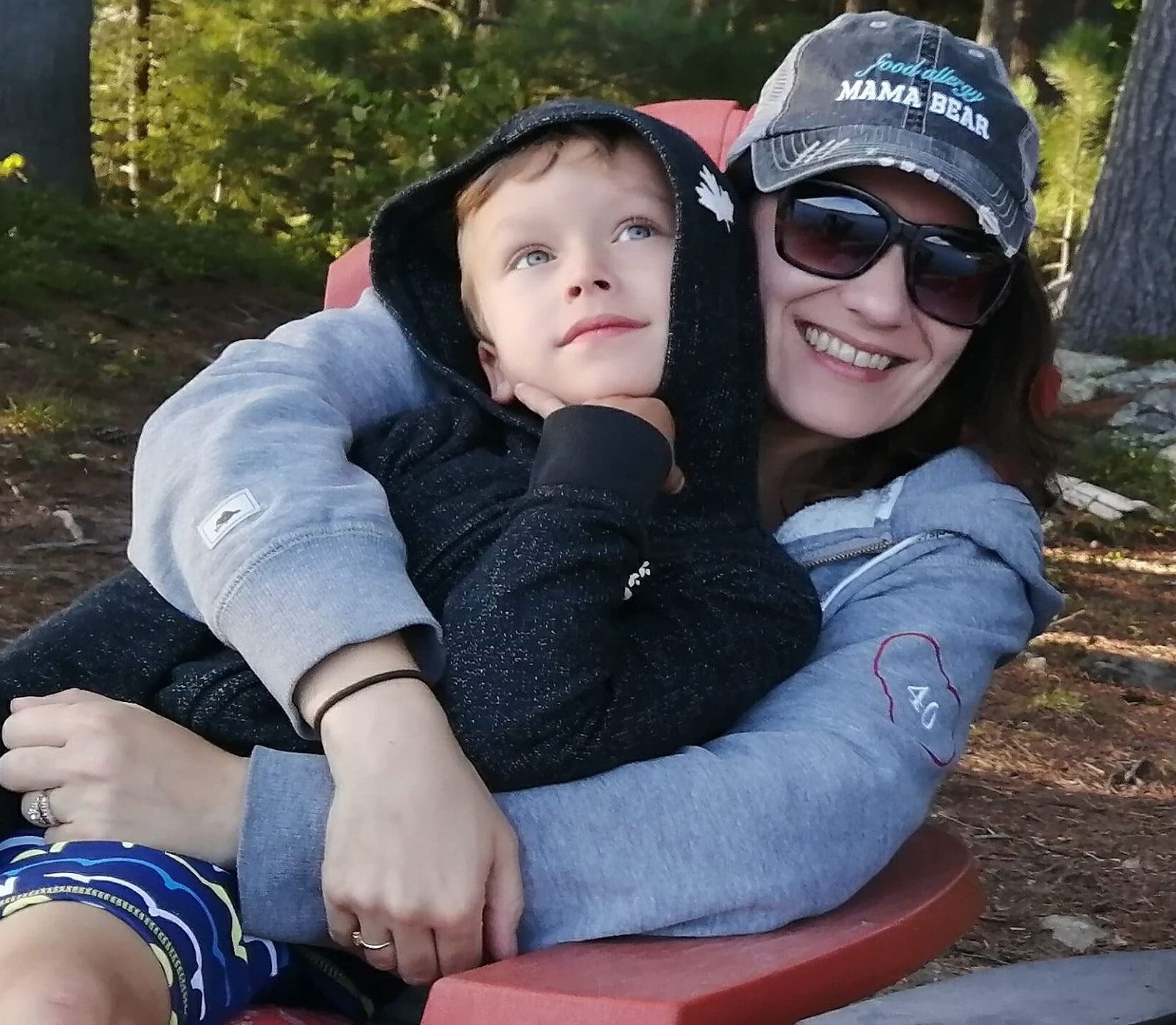
Meet our Host
Kathleen O’Hagan is the Digital Content Strategist & Writer at Serenia Life. She is married with one kid and two cats, and enjoys travel, discovering new restaurants, and idealizing life in the 80s and 90s. (Yes, she bought life insurance for her son – it’s an investment in his future! And yes, her pets are in her will.) See what else she has to say as host of the newly launched The Kinder Way Podcast.
